ThinkSwiss Scholarship
Opening doors for students from Australia and other countries to the world of Swiss academia.
ThinkSwiss
The ThinkSwiss Scholarship Programme supports students in Australia and select Pacific Island countries (Kiribati, Naoero, Papua New Guinea, Solomon Islands, Vanuatu, and Fiji) to develop lasting connections with Switzerland’s research, innovation, and policy communities.
ThinkSwiss supports targeted international mobility that creates the foundations for lasting collaborations. Depending on their objectives and career stage, applicants can undertake either a structured research stay at a Swiss host institution or a short-term activity designed to develop new networks, collaborative tools, partnerships, or pathways for future collaborations.
Applicants may apply to one of two streams:
- Stream A: Research Mobility
- Stream B: Collaboration Development – Networks, Tools & Pathways
To be eligible for a ThinkSwiss Scholarship, applicants must:
- Be currently enrolled at, or affiliated with, an accredited university or research institution in Australia or an eligible Pacific country;
- Be enrolled in a Bachelor’s degree and have completed at least their 2nd year of study, OR;
- Be enrolled in a Master’s degree, OR;
- Be enrolled in a PhD or other doctoral programme.
Applicants are responsible for checking their own visa requirements for travel to Switzerland and must ensure they hold any necessary visa or entry permit before the proposed activity begins. Eligibility for this programme does not constitute, and should not be relied upon, as confirmation of visa eligibility.
Applications for ThinkSwiss Research Scholarships open in September 2026 and close on 31 January 2027 at 23:59 AEDT.
For all inquiries, contact: canberra.scholarships@eda.admin.ch
Stream A: Research Mobility
Stream A entails a 31-90 day research stay at a Swiss university or public research institution. The purpose of the stay is to enable applicants to:
- Undertake a defined research project or component of their research;
- Develop research skills, methodologies, or expertise;
- Work with a Swiss research group or expert;
- Gain access to relevant facilities, infrastructure, or expertise;
- Establish or strengthen longer-term research ties between Switzerland and Australia or the Pacific.
Stream B: Collaboration Development
Stream B entails a short-term activity of 7-30 days designed to establish or advance a concrete collaboration between researchers, institutions, or other relevant actors in Switzerland and Australia or the Pacific. Activities could include:
- Developing a joint research concept or project;
- Preparing a future joint funding application;
- Establishing a research or innovation network or working group;
- Developing an institutional collaboration or exchange pathway;
- Preparing a joint workshop, programme, or future mobility exchange;
- Connecting researchers with industry, government, or policy partners;
- Developing a roadmap for future bilateral or regional initiative;
- Participating in a conference or workshop where this forms part of a clearly defined collaboration-development strategy.
How To Apply
Stage One:
Reach out to eligible host for your proposed activity. For Stream A, this should be the professor you intend to work with for your research project. For Stream B, this should be a Swiss partner/host to facilitate your programme of activities. Your communication with them should include:
- A structured proposal of your research/programme of activities;
- An introduction of yourself, your CV, and how your skills, competencies, and experiences will enable the work you wish to undertake;
- Why you would like to work with them and what are your intended outcomes.
- If they are willing to host you, request that they provide you with written confirmation that they agree to host you for the duration of your proposed activities.
Stage Two:
Prepare a proposal and motivation statement outlining:
- What research question, problem, objective, collaboration opportunity, or challenge are you seeking to address?
- Why is engagement with Switzerland important to your objective?
- Why is the proposed Swiss host institution, research group, or organisation particularly relevant?
- What will you do during your stay in Switzerland?
- What will exist at the end of the stay that did not exist before (knowledge, collaboration networks, methodology, tool, workshop, etc.)?
- Why is this opportunity important at this stage of your academic or research career?
- What experience, skills, or networks will you bring to facilitate the success of this project?
Stage Three:
Prepare the other required documents for the application:
- A letter of recommendation from a current or recent professor, supervisor, or other appropriate referee;
- Current or completed university transcripts;
- A current CV.
These documents, the proposal and motivation statement, and a host/partner confirmation letter should be submitted to: canberra.scholarships@eda.admin.ch.
Hear from past ThinkSwiss scholars
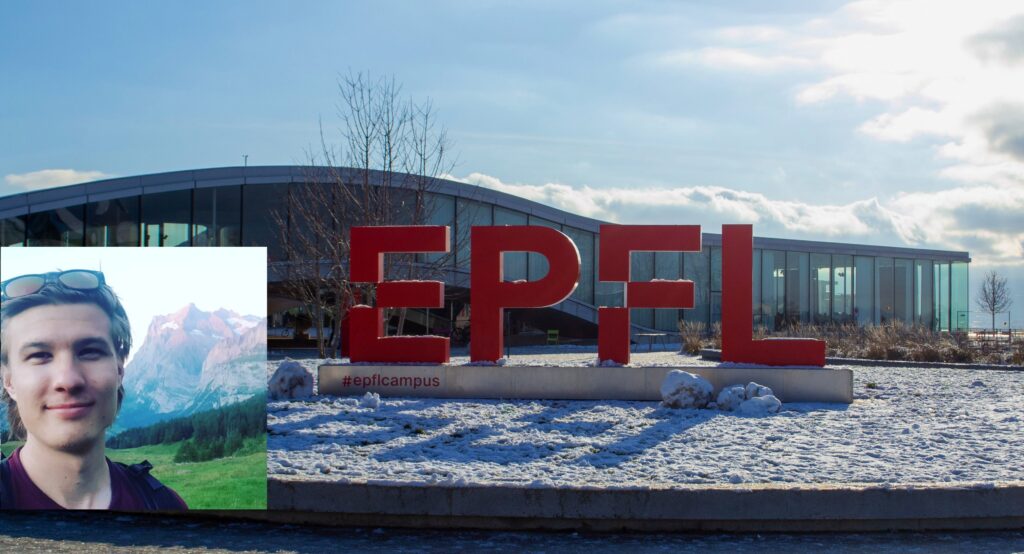
Using Twitter to find illegal weapons in war zones: new tool from Ryan’s Swiss study
Ryan Harvey
“We developed a new way to track illegal weapons through analysing images from Twitter,” Ryan Harvey said. “Our model may prove useful in real-life combat zones, such as the Russo-Ukranian war.”
As a ThinkSwiss scholar, Ryan completed 10 weeks of his Master’s degree at the Federal Institute of Technology in Lausanne (École Polytechnique Fédérale de Lausanne or EPFL) applying machine learning to identify weapons using image recognition.
Situated on the shore of Lake Geneva, EPFL is a key player in research and innovation in Switzerland and one of Europe’s most vibrant and cosmopolitan science and technology institutions.
“This work is an example of socially-motivated research, where we use AI techniques to learn something about the world,” Ryan said. “This project showed me I have the ability to do good work, that I can create something useful.”
Ryan’s new approach is unique as it identifies guns in photos of varying quality, even those with poor lighting and that feature numerous people and miscellaneous other items – which are typical of social media uploads.
With his new skill set in hand, Ryan is completing a thesis and working as a data scientist in banking. “I published my first journal paper thanks to my time in Switzerland, and that was key in helping my employer see what I am capable of,” Ryan said. “The scholarship was an important foot-in-the-door moment for me, as it opened up both my academic and my professional opportunities.”
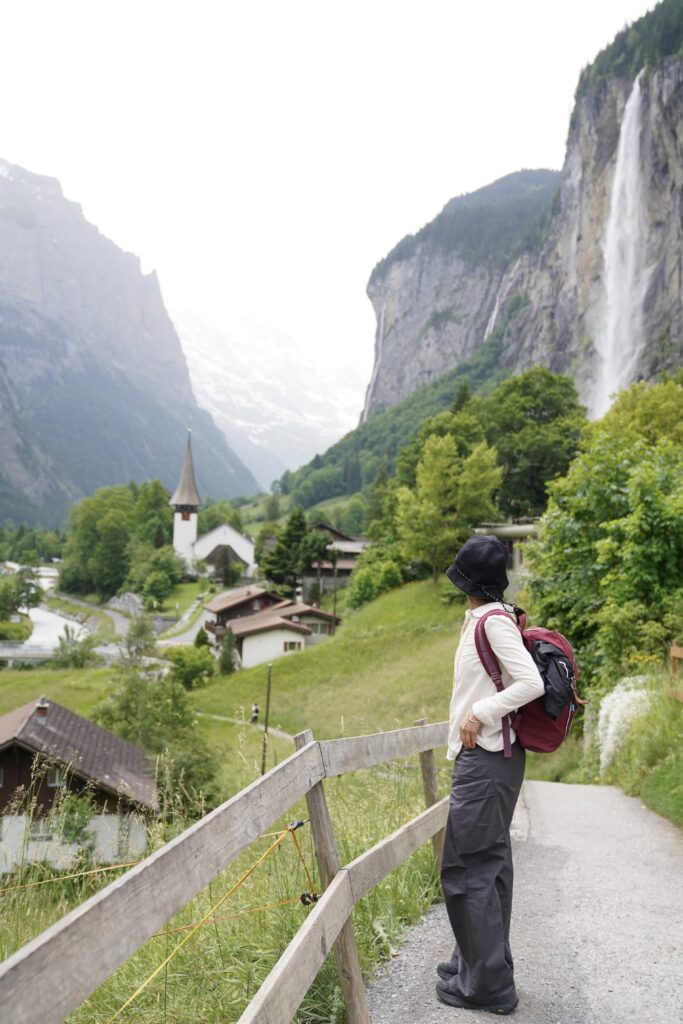
Immunology from Melbourne to Zürich
Jasmine Yeung
Jasmine Yeung’s research journey in Switzerland offered her an enriching three-month experience that combined cutting-edge immunology research with the vibrant Swiss culture and student life. As a ThinkSwiss scholar, Jasmine had the unique opportunity to immerse herself in a Swiss academic setting while enjoying weekend trips across the country.
“I was fortunate to join the Buch Lab at the Institute of Laboratory Animal Science at the University of Zurich, working under the supervision of Dr. Dominique Vanhecke,” Jasmine shared. “My project focused on studying T cell development, particularly the signals that control immune central tolerance.”
Jasmine applied her skills from Australia and gained new techniques from her Swiss colleagues, praising the lab’s collaborative and supportive atmosphere.
Jasmine emphasized the welcoming student life in Zurich. “I had the chance to meet students from all over the world, and the benefits of student life—like discounted public transport and museum access—made it even better,” she said.
Outside the lab, Jasmine embraced the chance to explore Switzerland. “Nearly every weekend, I traveled by train to visit different Swiss cities,” she said. “The mountains, lakes, and museums made my time there unforgettable.” For Jasmine, studying and living in Switzerland was a rare and rewarding experience that she’ll always cherish.
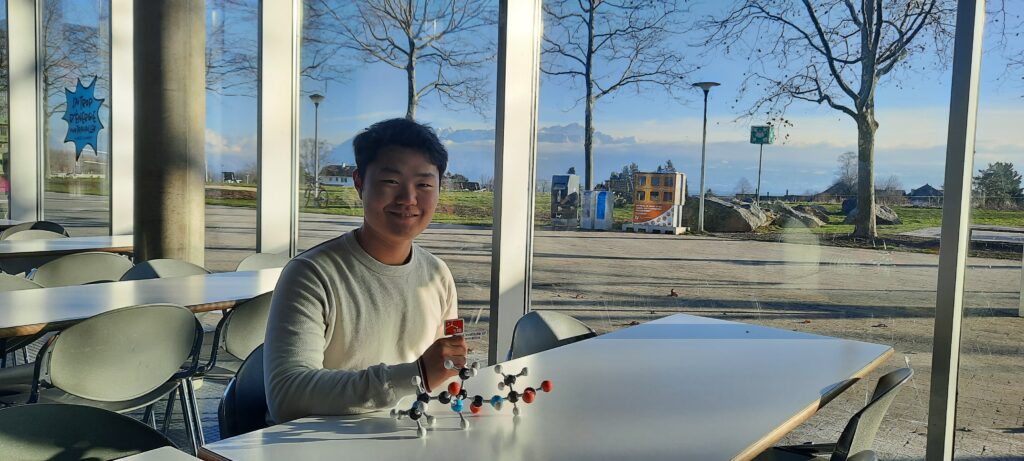
From Australia to Lausanne to tackle antibiotics resistance
Taehan Lim
Spending 83 unforgettable days in Switzerland over the summer of 2023-24 was an enriching experience that left an indelible mark on me. Based at the Swiss Institute of Bioinformatics in the University of Lausanne, with the majestic Alps and serene Lac Leman as my backdrop, each day was filled with excitement, dynamism and challenges.
Exciting: Being immersed in a world-class health research hub was truly exhilarating. The thrill of delving into cutting-edge research was palpable every morning when I commuted to the lab along the picturesque banks of Lac Leman. Fuelled by Swiss chocolate from the local Migros/Denner, and equipped with the lab’s state-of-the-art technologies, you could say I was in Swiss bliss. With access to powerful technologies and expert guidance, my research project accelerated tremendously and made huge strides forward.
Dynamic: Switzerland, nestled in the heart of Europe, proved to be a melting pot of ideas and cultures from all over the world. Engaging with individuals from diverse backgrounds in various activities broadened my horizons.
Whether it be throwing myself into Lindy hop, embracing calisthenics or savouring Rivella, every interaction was an opportunity for growth. But what was even more memorable was the conversations I had and the connections I formed. Listening to other peoples’ stories gave me an appreciation of the vastness of our world and the diversity that fills it.
Challenging. Every day in the lab presented fresh challenges that propelled me towards personal and scientific growth. Amidst these trials that really tested my mettle, I felt supported because I was fortunate to be a part of a group that valued both the individual and scientific excellence. As you can imagine, living halfway across the world for an extended period of time also presented its own challenges. However, it also unearthed untapped potential within myself that I never knew existed.
From taking a funicular up to Rochers de Nayes and exploring the Alps, to scaling a steep learning curve and using innovative technologies to find solutions for the global challenge of antibiotic resistance, my experience embodied the spirit of thinking big. It is a testament to the transformative power of embracing challenges, forming meaningful connections with people, and boldly venturing into the unknown.
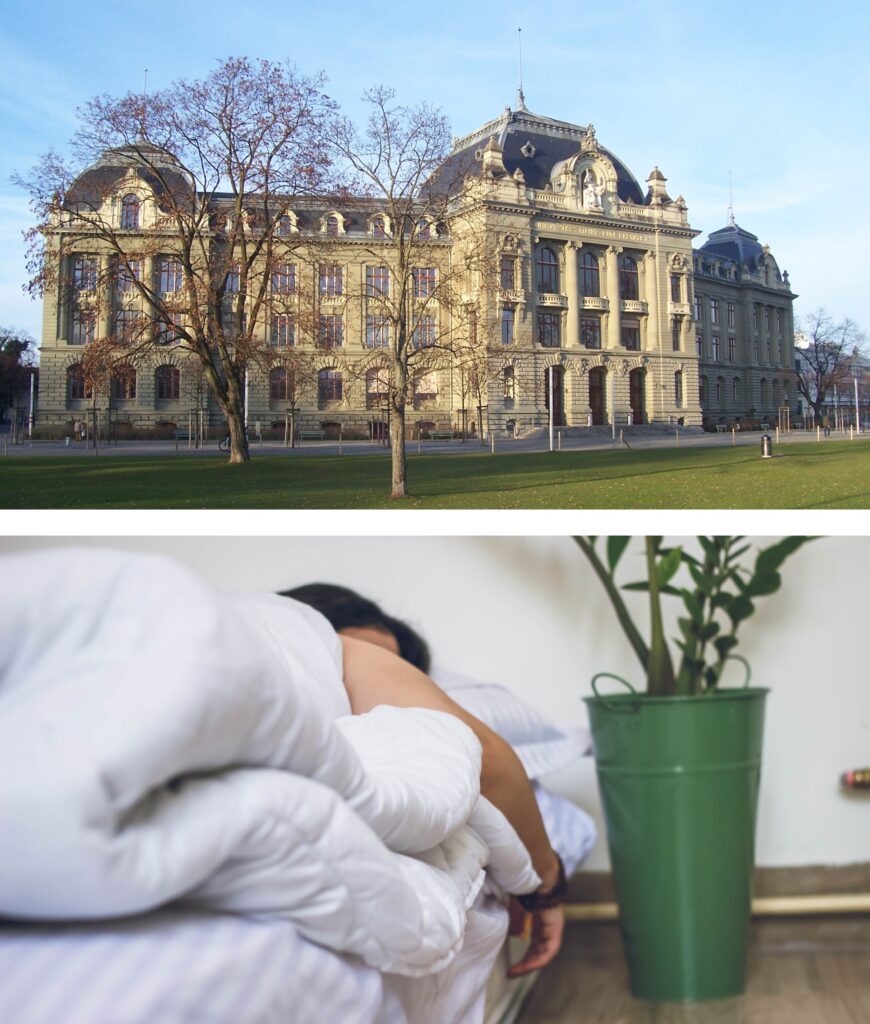
Tracking sleep to save lives: Thomas’ Swiss research to help high-risk teens
Thomas Nguyen
Dr Thomas Nguyen got the positive experience of working and living in Switzerland while researching a very serious topic – self-harm in young people.
Suicide is one of the leading causes of death worldwide in young people, but it can be difficult to identify and support children at highest risk.
Thomas, a clinician and ThinkSwiss scholar, said he felt very fortunate to join a child and adolescent psychiatry research team at the University of Bern and work on improving care for teenagers likely to self-harm.
“Doctors should assess sleep in young adults at risk of self-harm,” said Thomas. “Our study found high-risk teenagers who experienced poor quality sleep were more likely to later attempt suicide.”
“We’ve published our sleep study, and are continuing to work together on other research to identify risk factors for suicidal behaviours,” Thomas said. “Early detection and prevention of risk-taking and self-harm can be life-changing for young people and their families.”
Thomas undertook his 3-month scholarship as a final year medical student.
“I’d had done a little bit of research up until that point, but this was my first on an international scale,” he said. “My experience has reinforced my desire to pursue a career in psychiatry.”
ThinkSwiss Research Scholarships is a programme that opens doors for students from Australia to the world of Swiss academia. The scholarship accepts students who have completed their 2nd year of graduation or post-graduation, while still enrolled at an Australian university. “I definitely recommend this programme to medical students,” said Thomas.
I’d return in a heartbeat
Angela Michaelis
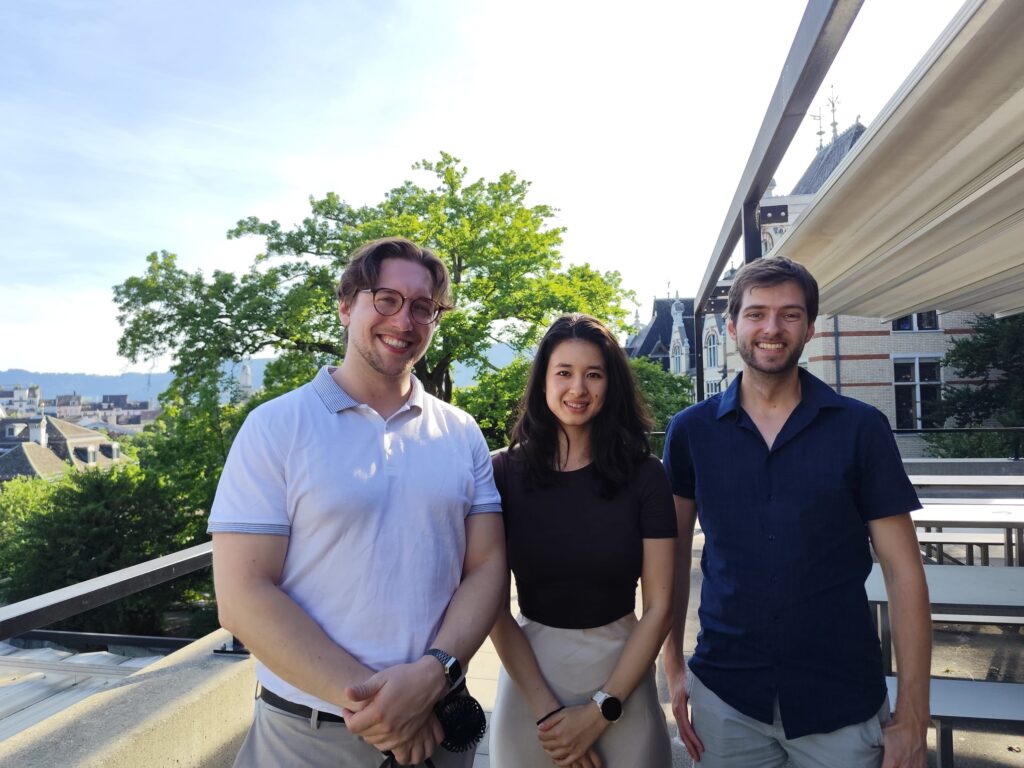
Angela’s research journey in Switzerland offered a transformative two-month experience that blended professional growth in health psychology with the unique academic and cultural life of Zurich. As a ThinkSwiss scholar, Angela had the chance to explore new research directions while also building lasting connections in and beyond the university.
“As part of the ThinkSwiss scholarship, I spent two months at the Department of Applied Social and Health Psychology at the University of Zurich under the supervision of Prof. Dr. Urte Scholz,” Angela shared. “This exchange allowed me to venture beyond my Master’s specialisation in organisational psychology and fully immerse myself in health psychology, a field I was always interested in but never had the chance to pursue.”
Angela’s project focused on social support and dyadic health behaviour change—specifically, how providing invisible support (subtle, unnoticed support by the recipient) affects physical activity and mood in romantic couples.
“Under Prof. Scholz’s mentorship, I was given full autonomy to shape my project, and generous support from her and her PhD students,” Angela said. “She consistently prioritised my professional development, ensuring I experienced every aspect of life as a researcher. One of the many highlights was the Innovations in Interpersonal Relationships and Health Research Conference, where I saw leading researchers present their latest work. Having the opportunity to connect with people whose passion and career journeys resonated with mine was invaluable.”
The two months passed quickly but left a deep impression. “Beyond the professional growth and a publication now in progress, it was the genuine connections and shared moments that transformed this from a research exchange into one of the most meaningful experiences of my life. Given the chance, I’d return in a heartbeat,” Angela reflected.
See other programmes on Head Start Swiss.